In case I haven’t mentioned it already, as a kid I spent a lot of time playing football outdoor with friends as well as football videogames. It’s not surprise then that not long after I started programming, around the age of 10-11, I told myself that one day I would develop a football game. Oh, so naive!
Unity Came Along
A few decades later, when Unity 3D started stealing the scene in the market of videogame development engines, I couldn’t miss the chance of giving it a go and trying to fulfill that promise made many years earlier. A small dream, I’d say.
Step By Step
A videogame contains a lot of graphics, sounds, it’s often silly – at least it used to be – and it’s meant to be fun. But a videogame still is a computer program and so it is subject to the same programming rules and process.
Trying to build such a complex program, with all the elements (the players) and rules of the game at once, could eventually put you off and make you lose interest as it starts taking too long before you can see a player finally scoring a goal, which is indeed – forgive the play on words here – the goal of the game.
It can be like trying to build the roof of a house, while still building the walls.
An iterative approach, instead, will give you feedback and satisfaction more quickly, making you look forward to the next phase.
The idea is to start with the minimum possible number of players and rules needed for one of the teams to score a goal, and incrementally add more of those until the game resembles an actual football match and it can be considered satisfactory.
Do You Like Scoring Easy?
The first iteration of the game has just a referee and one team on the pitch, with one player only. Let’s pretend the other team is off the pitch as they play at alternate rounds.
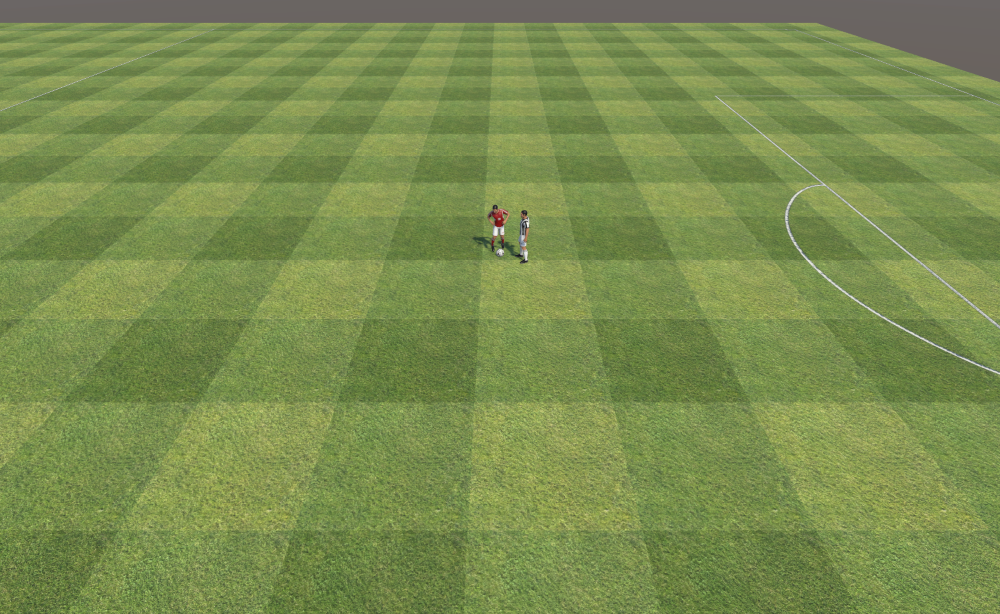
At the beginning of the scene, the two characters enter the pitch and position themselves ready to start.
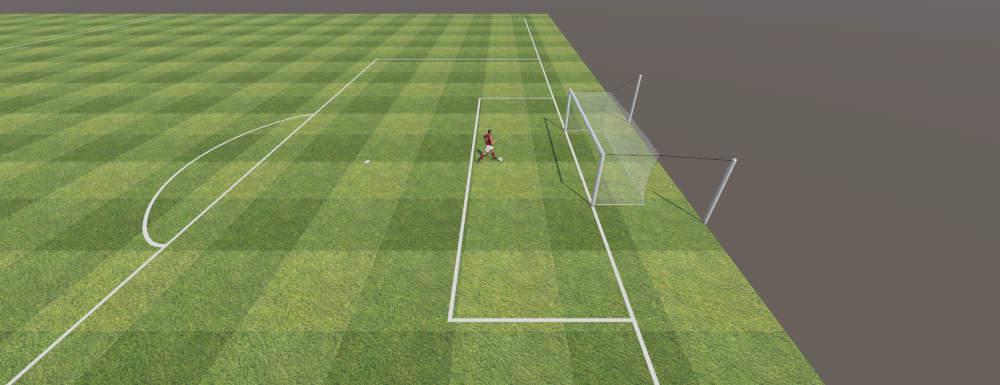
When the referee whistles the kickoff, all the player has and knows to do is to run with the ball straight into the opponent’s goal.
As the ball crosses the goal line entirely, that’s a goal for the playing team. Then the scoring player returns to the kickoff spot, the referee whistles the kickoff again and the game goes on like this forever (or until you decide to stop it).

No Way To Miss
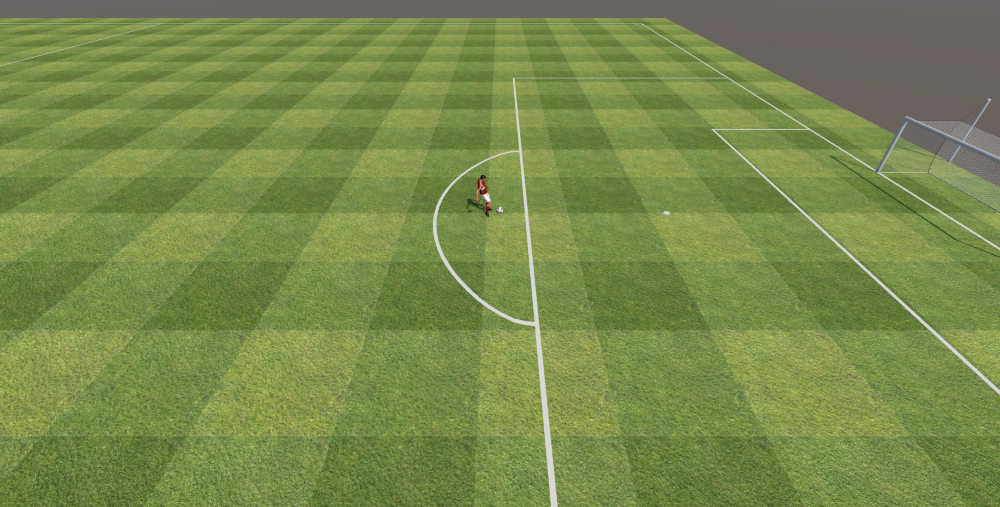
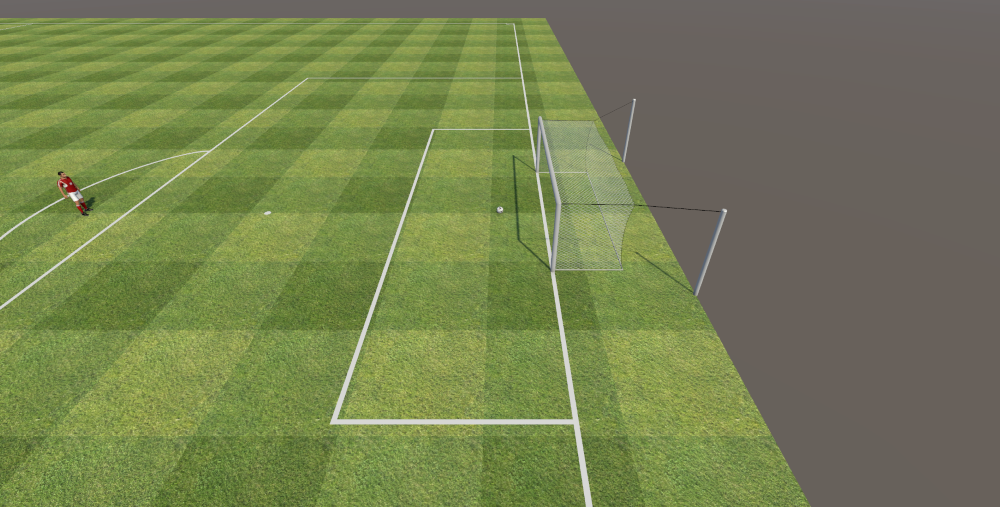
Now that our player can properly run in a straight line over and over again, it doesn’t take much work to give him the ability to perform a ground shot, when he gets close enough to the goal.
The ball will roll into the goal, keeping contact with the ground the whole time.
One Versus One
So far, so good for the red team’s player. Ridiculously easy, actually.
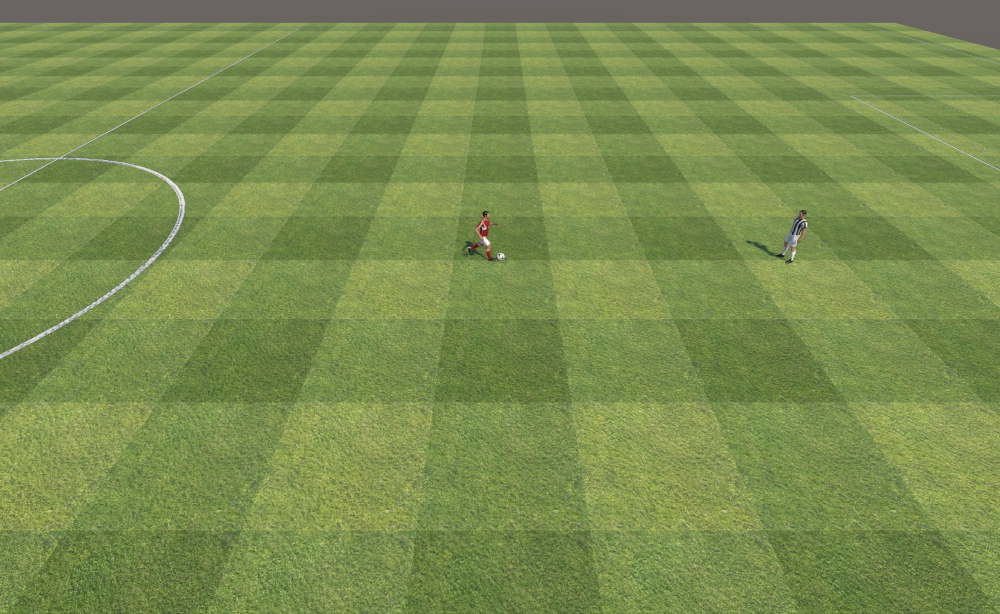
It’s time to introduce an opponent, to make things a bit fairer. The opponent, in black and white stripes, will stand still in his half of the pitch to make the task of the attacker a bit less linear. The red player will have to slightly change course when in proximity of the defending one, by performing a dribbling.

 Hurrikam's Diary